
- 27
- Apr
Intelligent Lighting Design and Application – A Practical Guide to Sleep Aid Mode
Intelligent Lighting Design and Application – A Practical Guide to Sleep Aid Mode
Before, I shared with you the lighting design of the home mode. Today, our main topic is “improving sleep quality,” “sleep aid mode,” and “the relationship between light and sleep.”
I can’t help but want to ask: how is your sleep quality? After a day of high workload, my sleep quality is not good. However, I have found that exercise regulation and environmental improvements can lead to higher sleep quality for me.
The lighting environment does indeed play a crucial role in supporting better sleep, particularly considering the significant decline in sleep quality experienced by many after COVID-19. If you face similar sleep-related challenges, I encourage you to carefully read this blog post.
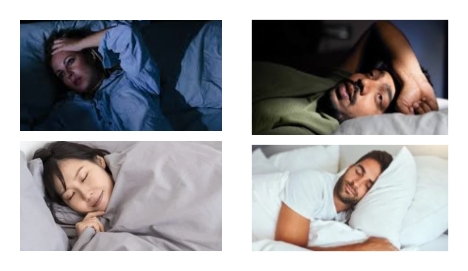
Perhaps other business owners have other questions. According to my habits, I’ll organize some lighting enthusiasts to ask me questions, as follows:
Why does blue light affect sleep?
What color night light is best?
How does lighting affect sleep?
What is good lighting for sleep?
Why do I sleep better with a light?
Do lights help sleep?
how to sleep well?
What is the best lighting for sleep?
Is it OK to sleep with lights on?
Are night lights good for sleep?
How do I get my RGB to turn off when I sleep?
Is it good to off light while sleeping?
Do night lights disturb sleep?
Why do people sleep with light on?
What is the best color night light for sleeping
What is the best night light for sleeping adults?
What are lighting tips to support sleep-wake patterns?
What does artificial light do to human sleep patterns?
Let’s find ways to solve these problems together, right? Now, let’s delve into the intelligent lighting design-how to use sleep mode?
Sleep Mode – Using the Right Light to Enhance Your Nighttime Sleep
“Did you sleep well last night?” We often greet our relatives and friends with this question in the early morning. Perhaps you have also experienced that the quality of sleep directly affects your physical state and mood throughout the day. Due to the pressures of life and work, many people suffer from sleep problems such as difficulty falling asleep, light sleep, and waking up frequently. So, how can we ensure a good night’s sleep? And what factors are affecting our sleep? Can we improve these obstacles through lighting design (Figure 1) and achieve a better night’s sleep?
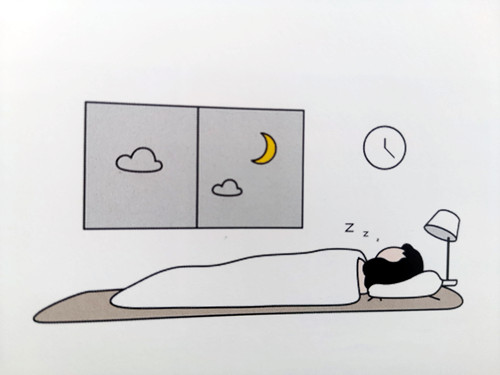
“Tips for Scene Design of ‘Sleep Aid Mode’
The Unignorable “Circadian Rhythm”
In home lighting design, the most crucial principles to consider are health and comfort. This is especially true for people with sleep disorders, as a home lighting environment that aligns with the circadian rhythm can significantly improve sleep quality. Warm-colored light induces a sense of relaxation, so it’s essential to set the color temperature of bedroom lighting not too high, preferably around 3000~3500K. Studies have also shown that adjusting the room illumination to levels below 501x helps stimulate the secretion of melatonin in the human body. Ideally, in the hour before falling asleep, the color temperature and brightness of the light should gradually decrease, creating a soothing effect on the mind, helping people adapt to the changing light environment, and facilitating a natural transition into a state of sleep.
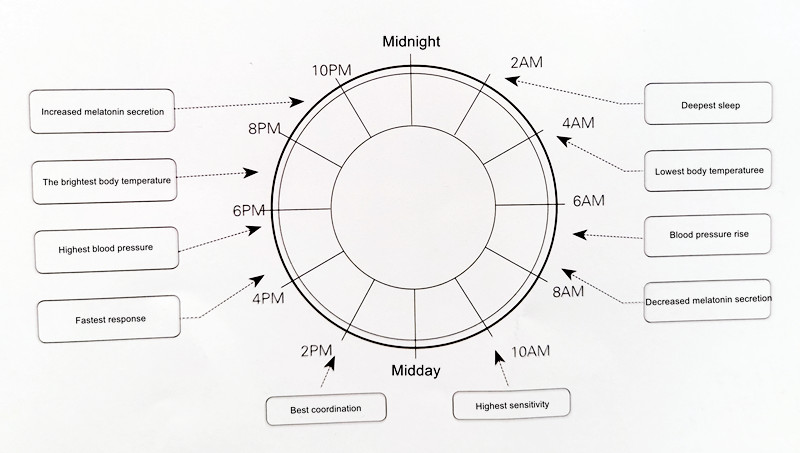
Figure 2 depicts the circadian rhythm, which plays a crucial role in our sleep patterns. Melatonin, in particular, is closely related to our sleep, responding to changes in light and darkness. Proper melatonin regulation can reduce the time taken to fall asleep, increase the duration of deep sleep, and overall improve sleep quality.
In traditional lighting setups found in most homes, the lights typically have only two states: on and off, with fixed values for color temperature and brightness. This limited and abrupt light switching method disrupts people’s natural circadian rhythm, consequently affecting their ability to fall asleep and influencing their mood. Improperly set color temperature or brightness can also negatively impact the secretion of melatonin in the human body. Therefore, achieving good sleep hinges on having appropriate lighting. If you suffer from insomnia, it’s essential to evaluate whether the lighting in your bedroom is conducive to restful sleep.
Good Light, Good Sleep
In traditional home design, the lighting cannot be seamlessly integrated with people’s work and rest habits, thus failing to automatically adjust the lighting according to their nighttime rhythm. However, in a smart home system, it becomes possible to collect and analyze data related to work and rest, such as historical lighting usage or sleep monitoring data from third-party platforms like mobile applications or smart bracelets.
By utilizing a large background database and employing statistical methods like machine learning, the smart home system can predict the user’s sleep habits, including wake-up times, bedtime, and falling asleep duration. Subsequently, the intelligent lighting system can automatically configure the start time, end time, color temperature, and brightness change mode for the “sleep aid mode” based on these sleep habits (refer to Figure 3).
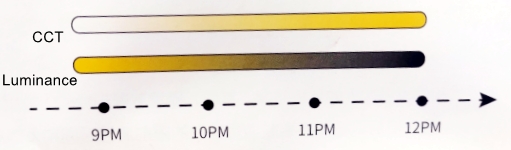
During the period leading up to the end of the “sleep aid mode,” the brightness can gradually decrease, reaching its darkest point, while the color temperature gradually decreases until all lights are turned off (see Figure 4 for lighting effects). The stepless adjustment function of intelligent lamps ensures that the transitions in the “sleep mode” are comfortable and natural.
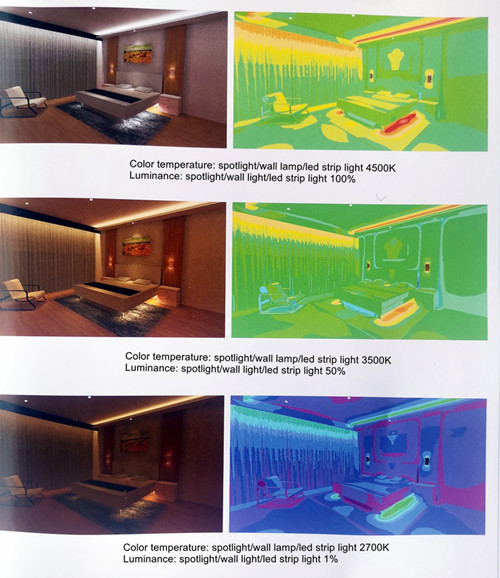
Of course, the intelligent lighting system also allows for manual configuration of the “sleep aid mode.” Users can set the effective time of the mode and customize the gradient range and speed of the color temperature and brightness changes according to their preferences or if they wish to manually adjust their schedule. This manual configuration proves particularly useful when customization is required or if one wants to fine-tune the lighting to address specific sleep issues. After using the manual configuration for a while, users can adjust it further based on their sleep situation to continually improve sleep quality.
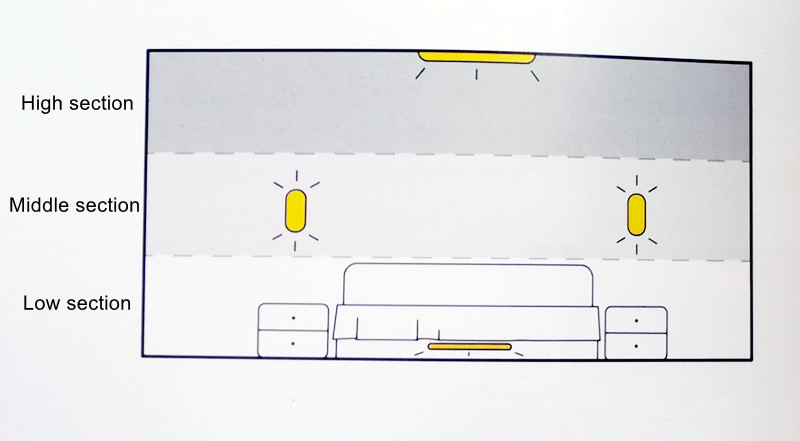
In addition to the basic “sleep mode” lighting design, the grouping function of lamps can be utilized to implement progressive lighting designs (see Smart Lighting Design and Application – ‘Home Mode’ Setup Guide). This approach allows different lamps to change gradually in different areas of the space. For instance, Figure 5 demonstrates the “from high to low” gradient method, where lights in the higher section (such as ceiling-mounted downlights) are dimmed first to reduce the overall brightness. Subsequently, the lighting in the middle section (e.g., bedside wall lamps) can be dimmed after a period, facilitating bedtime reading. Finally, the light strip under the bed is dimmed, leading to a complete switch-off of all the lights in the house.
Creating Dreamliner’s Sleep Aid Color Light
Let’s take inspiration from the lighting design in aircraft cabins (refer to Figure 6) when designing the “sleep aid mode” lighting. During the transition from the dining mode to the sleep mode, the cabin lighting mimics the effect of a sunset, gradually transitioning from bright to dark. The main overhead cabin lights shift from bright orange to red, and then to light blue and dark blue. Simultaneously, the lights in the middle of the cabin gradually change from orange to dark blue while maintaining low brightness. The ground channel lighting at the bottom also gradually dims, allowing passengers to feel and adjust to the darkening sky, creating a soothing atmosphere. We can use a similar approach in the lighting design of the “sleep aid mode” by using RGB color lights to simulate the changing colors of the cabin lights, thereby enhancing the sleeping atmosphere (see Figure 7).



Figure 7 Lighting effect map and false color map of illumination degree of sleep aid mode of color light version-
In this color light version of the “sleep aid mode,” the color temperature and brightness changes of the spotlights and wall lamps are the same as mentioned before. Colored light strips are added on the ceiling and under the bed, starting with a dark orange color, reminiscent of the dining mode in Dreamliner, which signals the transition to rest time. After approximately half an hour, the ceiling light strips change to a calming blue, which helps soothe the mind. Another half-hour later, the light strip under the bed also turns blue, with brightness reduced to a minimum, creating an overall serene space atmosphere that naturally aids in falling asleep.
Step by Step Guide to Achieving the “Sleep Aid Mode”
Step 1: Designing the Lighting Points
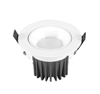
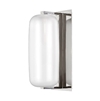
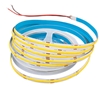
Let’s take the bedroom design case in this section as an example to complete the lighting point design (refer to Figure 8). For the bedroom, we will use three types of lamps: spotlights, light strips, and wall lamps (see Figure 9 for an overview of the “Sleep Aid Mode” products).


Step 2: Purchasing Lamps and Intelligent Linkage Equipment
Table 3.5 provides the lamp models and quantities for reference. We will employ the method of switching lights on and off at regular intervals. In the smart home system, we’ll set different changes in lamps at different times based on our work and rest habits. This way, there’s no need to actively trigger the start of the “sleep aid mode.” Of course, the mode can also be activated through voice commands from a voice speaker or the button on the smart situation panel.
Table 3.5 “Sleep Aid Mode” Lamps
|
Lamp Name |
Size
(mm) |
Power
(w) |
Color Temperature (K) | Beam Angle (°) | Amount
(pcs) |
Lamp Picture |
| Φ93*73.5 | 10 | 2700-6500 | 24 | 5 |
|
|
| Wall Lamp | 40*120*50 | 8 | 2700-6500 | 60 | 2 |
|
| Multicolor LED Light Strips |
standard length 1m |
4W/m |
RGB |
120 |
8m |
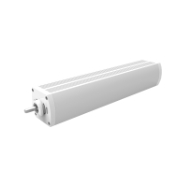
While considering smart linkage equipment, we’ll focus solely on the design of lighting. However, we recommend installing smart curtain motors at home to add curtains to the linkage. When the “sleep mode” is activated, the curtains will automatically close. Table 3.6 lists the relevant parameters of a “sleep aid mode” smart linkage device.
|
Device Name |
Function | Basic Parameters | Product Picture |
| Smart Curtain Motor | Linkage, close the curtains regularly;
Wi-Fi Bluetooth dual-mode, can be used as a gateway |
Output speed: 80r/min
Moving speed: 12cm/s Track load: up to 50kg Wireless connection: Wi-Fi 2.4 GHz; Bluetooth 4.2BLE |
|
Step 3: Setting Lighting and Smart Linkage Rules
(1) Lighting Design Method
In this step, we’ll configure the “sleep mode” using a “high to low” dimming lighting design.
(2) Connecting the Devices to the Smart Home System
Follow the product instructions to connect the lamps and smart curtains to the smart home system.
(3) Lamp Grouping
Divide the lamps in the bedroom into three sections: high section (ceiling light strip and spotlight), middle section (wall lights), and low section (bed bottom light strip).
(4) Configuring the Color Temperature and Brightness of the Lamps
If we follow the timing setting method, the image temperature and brightness of the high, medium, and low lamps will differ in three different time periods. Refer to the lamp configuration in Table 3.7, and then set the color temperature and brightness of the lamps at different times in the App. Illustrates the process of configuring the high-level lamps based on Table 3.7. Follow a similar configuration process for the middle section and the low section.
Table 3.7 “Sleep Aid Mode” lighting rule configuration
|
Period |
High Section | Middle Section | Low Section |
|
21:00-21:30 |
Color temperature: 3500K
Luminance: 50% |
Color temperature: 3500K
Luminance: 50% |
Color temperature: 3500K
Luminance: 50% |
|
21:30-22:00 |
Color temperature: 2700K
Luminance: 1% |
Color temperature: 3500K
Luminance: 50% |
Color temperature: 3500K
Luminance: 50% |
|
22:00-22:30 |
Color temperature: 2700K
Luminance: 1% |
Color temperature: 2700K
Luminance: 1% |
Color temperature: 2700K
Luminance: 1% |
| After 22:30 | Closure | Closure |
Closure |
(5) Setting Linkage Rules for Lamps and Curtain Motors
When the “sleep aid mode” is activated, the curtains should close automatically . This completes the configuration of the “sleep mode.”
Entry-Level “Sleep Aid Mode” for Beginners
Similar to the entry-level “home mode,” if you have a limited budget for equipment purchases or prefer to use a ceiling lamp in the bedroom, you can try the following entry-level “sleep aid mode.” Begin by placing a bedside lamp on the bedside table for convenient bedtime reading. For instance, you can gradually reduce the color temperature and brightness of both the ceiling lamp and the bedside lamp as time passes (refer to Figure 10 for the lighting effect). Provided below is reference data for suitable ceiling and bedside lamps for the bedroom (see Table 3.8).

Table 3.8 Entry-level “sleep aid mode” lamps
|
Lamp Name |
Size
(mm) |
Power
(w) |
Color Temperature (K) | Beam Angle (°) |
|
Smart ceiling light |
960*640 | 90 |
2700-6500 |
|
| smart bedside light | Φ140*100 | 5 | WRGB |
|


Additionally, some smart ceiling lamps now come with a built-in “sunset sleep aid” light mode. This mode automatically sets the color temperature and brightness of the light to imitate the natural light change during sunset, gradually fading to the darkest setting, and finally turning off the light after 10 minutes. To activate this mode, simply select the light in the “execute” command and choose the “sunset sleep aid light mode” .